
A hernia is a common medical condition that occurs when an internal organ or tissue pushes through a weak spot in the surrounding muscle or connective tissue. While some hernias may initially appear harmless, delaying treatment can lead to serious complications.
According to Dr. Apurwa, General, Gastro & Laparoscopic Surgeon, early diagnosis and timely surgical intervention can help patients avoid discomfort and prevent future health risks.
What is a Hernia?
A hernia develops when an organ or fatty tissue protrudes through a weak area in the muscle wall. It most commonly occurs in the abdomen and groin region.
The condition can affect people of all ages, although it is more frequently seen in adults.
Common Types of Hernia
1. Inguinal Hernia
The most common type of hernia, occurring in the groin area.
2. Umbilical Hernia
Occurs near the belly button and is common in infants and adults.
3. Incisional Hernia
Develops at the site of a previous surgical incision.
4. Femoral Hernia
Appears in the upper thigh region and is more common in women.
5. Hiatal Hernia
Occurs when part of the stomach pushes through the diaphragm into the chest cavity.
Symptoms of Hernia
The symptoms can vary depending on the type and severity of the hernia.
Common signs include:
- Visible lump or swelling
- Pain while lifting heavy objects
- Burning or aching sensation
- Feeling of pressure in the abdomen
- Groin discomfort
- Increased pain while coughing or bending
In some cases, the swelling may disappear when lying down and reappear while standing.
What Causes Hernia?
Several factors can contribute to hernia development:
- Weak abdominal muscles
- Heavy weight lifting
- Chronic cough
- Obesity
- Pregnancy
- Constipation and straining
- Previous abdominal surgery
- Aging
Maintaining a healthy lifestyle can help reduce the risk.
When is Hernia Dangerous?
Seek immediate medical attention if you experience:
- Severe abdominal pain
- Sudden increase in swelling
- Nausea or vomiting
- Redness around the hernia
- Inability to push the bulge back
These may indicate a strangulated hernia, which requires emergency treatment.
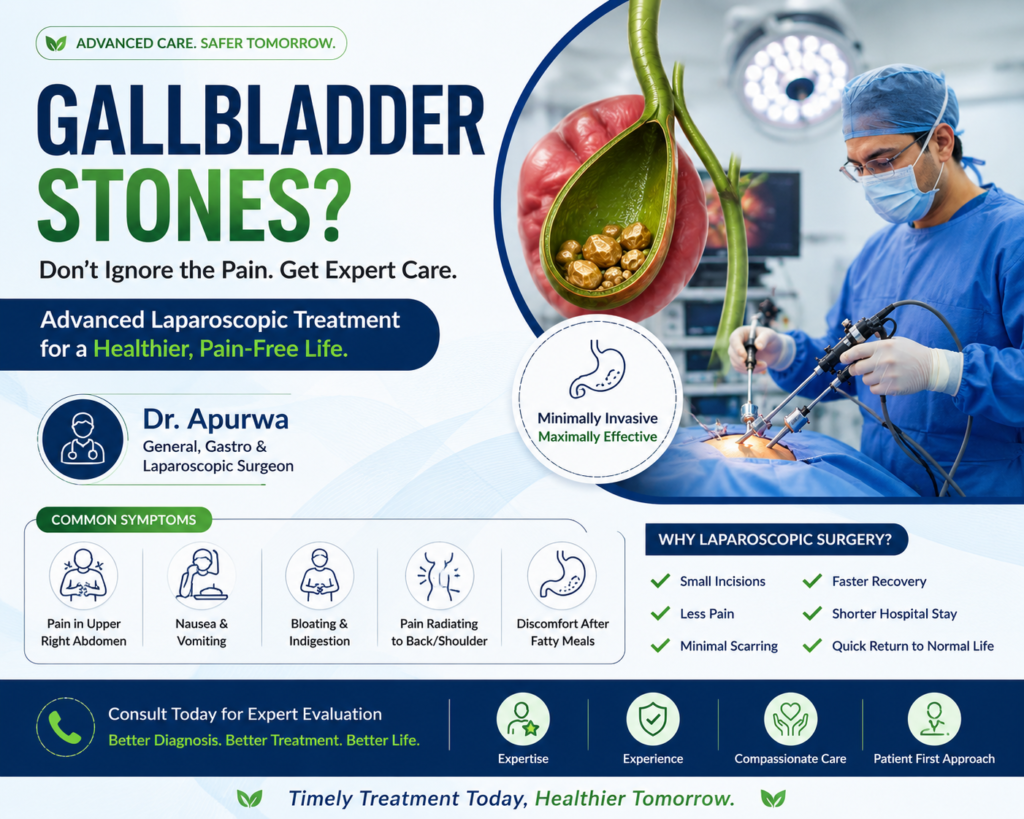
Advanced Laparoscopic Hernia Treatment
Modern hernia treatment is safer and more effective than ever before.
Laparoscopic Hernia Repair is a minimally invasive surgical procedure performed through small incisions using a camera and specialized instruments.
Benefits of Laparoscopic Surgery
✔ Smaller cuts
✔ Less pain
✔ Faster recovery
✔ Minimal scarring
✔ Lower infection risk
✔ Early return to work
Most patients are able to resume normal activities much sooner compared to traditional open surgery.
Recovery After Hernia Surgery
Recovery depends on the size and type of hernia, but most patients can:
- Walk within a few hours
- Return home the same day or next day
- Resume light activities within a few days
- Return to work within 1–2 weeks
Following your surgeon’s instructions is essential for a smooth recovery.
Expert Hernia Care by Dr. Apurwa
With extensive experience in General, Gastro & Laparoscopic Surgery, Dr. Apurwa provides comprehensive diagnosis and advanced treatment for all types of hernias.
Using modern laparoscopic techniques, patients benefit from safer procedures, less pain, and quicker recovery.
Conclusion
Ignoring a hernia can lead to complications and affect your quality of life. If you notice a swelling, discomfort, or persistent abdominal pain, consult a qualified specialist without delay.
Early diagnosis and advanced laparoscopic treatment can help you return to a healthy and active lifestyle.
FAQ Schema
Can a hernia heal without surgery?
No. A hernia typically does not heal on its own and often requires surgical repair.
Is laparoscopic hernia surgery safe?
Yes. It is a safe and commonly performed procedure with excellent success rates.
How long does hernia surgery recovery take?
Most patients can return to light activities within a few days and resume normal work within 1–2 weeks.
Can a hernia come back after surgery?
The risk is low, especially when treated using modern surgical techniques and proper post-operative care.