
Gallbladder stones, commonly known as gallstones, are one of the most frequent digestive disorders affecting adults. While some people may never experience symptoms, others can suffer from severe abdominal pain and digestive complications that require immediate medical attention.
According to Dr. Apurwa, General, Gastro & Laparoscopic Surgeon, early diagnosis and timely treatment can help prevent serious complications and ensure a smooth recovery.
What Are Gallbladder Stones?
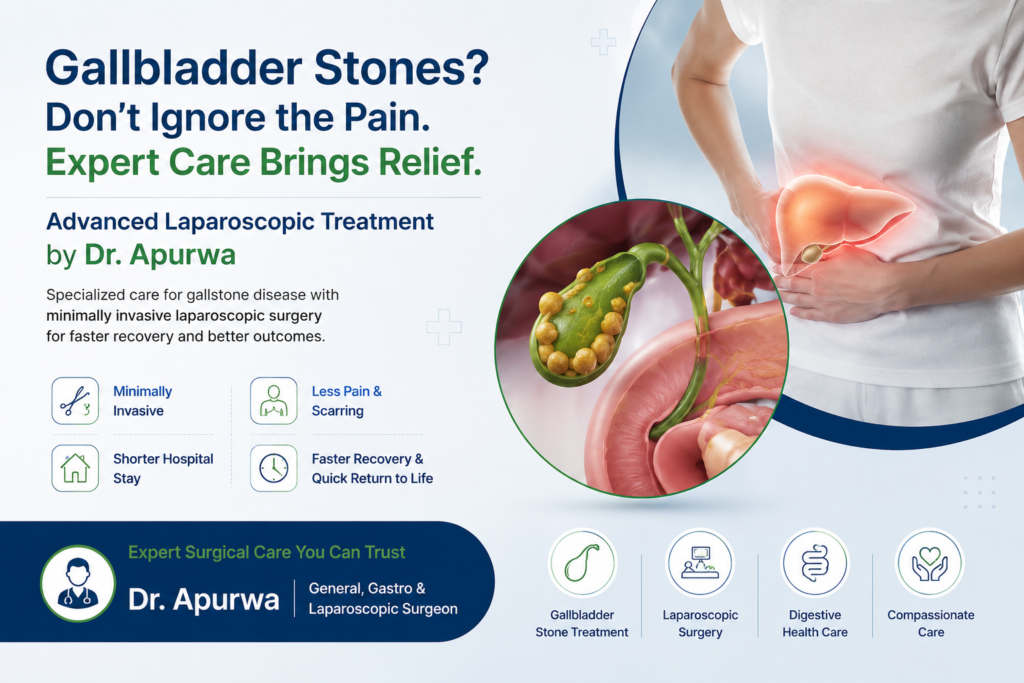
The gallbladder is a small organ located beneath the liver. It stores bile, a digestive fluid that helps break down fats. When substances in the bile become unbalanced, hard deposits known as gallstones can form.
These stones may vary in size from tiny grains to large stones that can block the bile ducts and cause significant discomfort.
Common Symptoms of Gallstones
Many individuals remain symptom-free for years. However, when symptoms appear, they may include:
- Sudden pain in the upper right abdomen
- Pain after eating fatty foods
- Nausea and vomiting
- Indigestion and bloating
- Pain radiating to the back or right shoulder
- Fever in case of infection
If left untreated, gallstones can lead to serious complications such as gallbladder inflammation and bile duct blockage.
Who Is at Risk?
Several factors increase the likelihood of developing gallstones:
- Obesity
- High-fat diet
- Rapid weight loss
- Diabetes
- Family history of gallstones
- Age above 40 years
- Female gender
Maintaining a healthy lifestyle can help reduce the risk.
Diagnosis
Gallstones are usually diagnosed through:
- Physical examination
- Ultrasound imaging
- Blood tests
- Advanced imaging when necessary
Early diagnosis allows for better treatment planning and prevention of complications.
Advanced Laparoscopic Treatment
For symptomatic gallstones, Laparoscopic Cholecystectomy is considered the gold-standard treatment.
This minimally invasive procedure involves removing the gallbladder through small incisions using a camera and specialized surgical instruments.
Benefits of Laparoscopic Surgery
- Smaller incisions
- Less pain
- Minimal scarring
- Faster recovery
- Shorter hospital stay
- Early return to daily activities
Modern laparoscopic techniques have significantly improved patient outcomes and comfort.
When Should You Consult a Surgeon?
Seek immediate medical attention if you experience:
- Persistent abdominal pain
- Repeated gallstone attacks
- Fever with abdominal pain
- Yellowing of the eyes or skin (jaundice)
- Severe nausea and vomiting
Timely consultation can prevent complications and improve treatment success.
Expert Care by Dr. Apurwa
With expertise in General, Gastro & Laparoscopic Surgery, Dr. Apurwa provides comprehensive evaluation and advanced treatment for gallbladder stones. Using modern minimally invasive techniques, patients benefit from safer procedures and faster recovery.
Conclusion
Gallbladder stones should never be ignored. Early diagnosis and expert surgical care can help prevent serious complications and restore your quality of life. If you are experiencing symptoms of gallstones, consult Dr. Apurwa, General, Gastro & Laparoscopic Surgeon, for professional evaluation and advanced laparoscopic treatment.
FAQ Schema
Is gallbladder stone surgery safe?
Yes. Laparoscopic gallbladder surgery is a safe and widely performed procedure with excellent outcomes.
Can gallstones go away without surgery?
Symptomatic gallstones generally require surgical treatment to prevent recurring attacks and complications.
How long does recovery take after laparoscopic surgery?
Most patients can resume normal daily activities within a few days to a couple of weeks, depending on their overall health.